
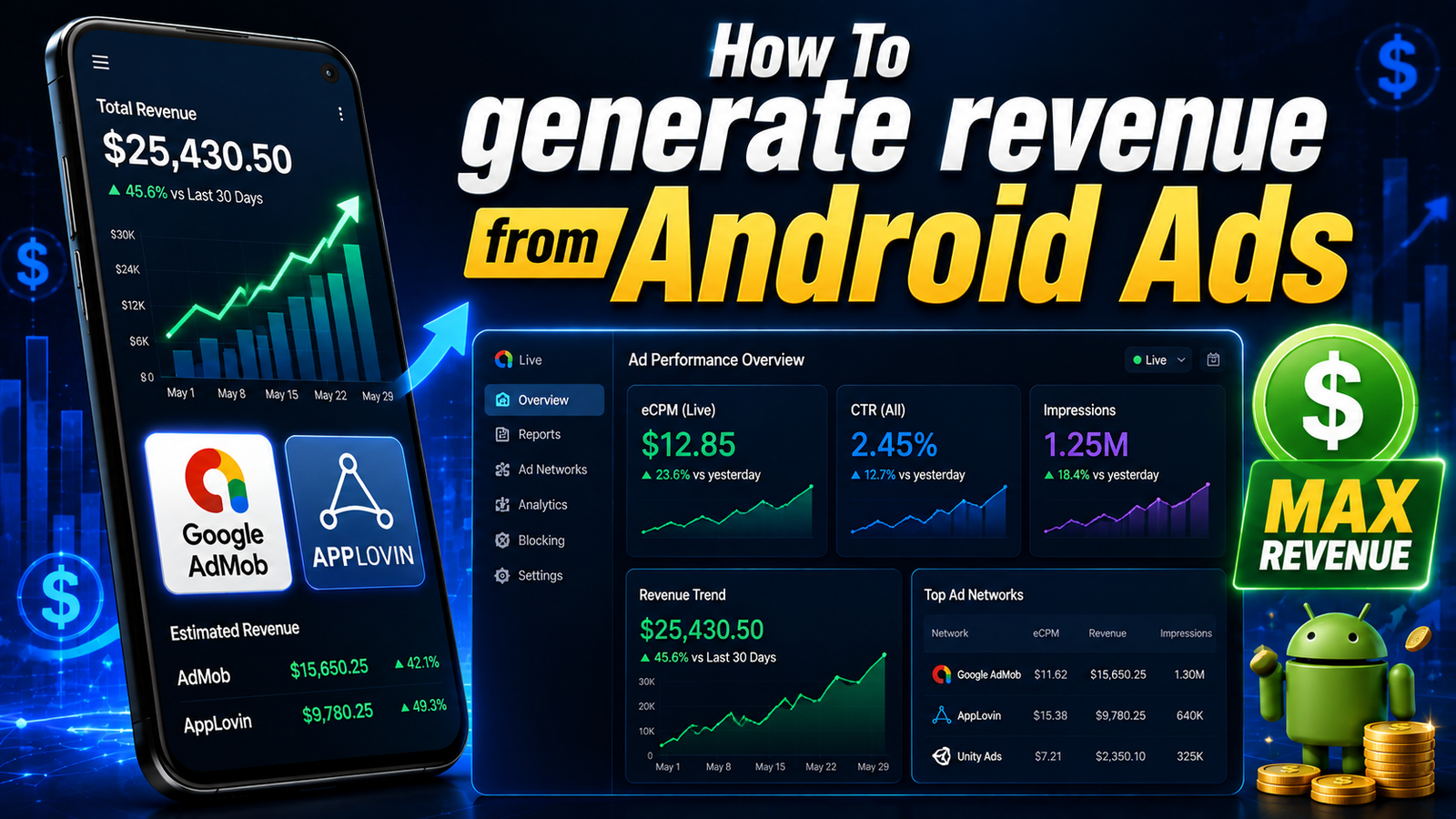
Choosing the right ad networks, balancing eCPMs, understanding realistic revenue estimates, and keeping your app compliant with strict store algorithms are critical steps to building a sustainable monetization engine.
Building a feature-rich Android app takes weeks of coding, debugging, and UI design. But once your creation is live on the Google Play Store, the immediate question every indie developer and studio asks is simple: How do I turn this traffic into steady revenue?
In-app advertising remains the most scalable way to monetize an Android application without putting a paywall in front of your core user base. However, dropping random ad units into your source code and hoping for the best will not cut it anymore.
Exploring Major Ad Networks: Where Should You Monetize?
Not all ad networks are built the same, and relying on just a single network often leaves money on the table. To maximize your fill rates and bidding competition, you need to understand the heavy hitters in the mobile ecosystem:
Google AdMob
AdMob is the undisputed default choice for most Android developers. Backed by Google’s massive global advertiser demand, it offers seamless integration, high fill rates across almost every country, and robust support for diverse ad formats. While its policy enforcement and account reviews are notoriously strict, it remains the bedrock of most Android monetization stacks.
AppLovin (MAX Mediation)
AppLovin has grown into an absolute powerhouse for mobile monetization, particularly known for its MAX mediation platform. It uses a real-time bidding (RTB) auction model that forces multiple ad networks to compete for your impression simultaneously. This fierce competition routinely drives up effective cost per mille (eCPM) rates, especially for gaming and utility apps.
Unity LevelPlay
If you are building mobile games, Unity LevelPlay is an industry standard. It provides exceptional mediation tools tailored specifically for game loops, offering seamless integration for rewarded videos, interstitials, and cross-promotion campaigns that keep player retention high while optimizing ad yield.
Meta Audience Network & Alternative Networks
While Meta Audience Network can deliver strong CPMs in specific regions, many developers use it alongside secondary networks like Mintegral, Liftoff, or InMobi inside a unified mediation layer. This multi-sdk strategy ensures that if one network fails to fill an ad request, another steps in instantly.
Understanding Ad Formats and Estimated Revenue
Your revenue potential depends heavily on the ad formats you choose, user engagement depth, and your geographic traffic distribution (Tier 1 countries like the US, UK, and Canada vs. Tier 2 and 3 regions).
Banner Ads
Banners sit discreetly at the top or bottom of a screen. They generate low per-impression revenue, but because they stay visible during long sessions, they provide a steady baseline. Global eCPMs for banners typically range from $0.50 to $2.10 in top markets. For a utility app with roughly 30,000 daily active users (DAU), persistent banners can bring in an estimated $600 to $900 monthly.
Interstitial Ads
Full-screen static or video ads appear during natural natural breaks in your app, such as clearing a game level or switching between menu items. They yield much higher eCPMs—frequently ranging between $6.00 and $12.00 in Tier 1 regions. However, you must apply strict frequency capping (such as showing one every few minutes) to prevent users from abandoning your app out of frustration.
Rewarded Video Ads
The undisputed king of ad revenue is the rewarded video. Users voluntarily watch a video in exchange for an in-app benefit, such as virtual currency, extra lives, or premium features unlocked temporarily. Because engagement and completion rates regularly exceed 85% to 95%, advertisers pay top dollar. eCPMs for rewarded video regularly sit between $10.00 and $45.00. A mid-sized app leveraging rewarded placements effectively can derive over 50% to 70% of its total revenue from this format alone.
Competitive Analysis: What Are Most Monetization Guides Missing?
Most online tutorials talk endlessly about choosing AdMob, but they leave out the operational blind spots that hurt real developers:
Ignoring SDK Bloat and Latency: Integrating five different ad network SDKs without proper mediation can add seconds of lag to your app load times. Slow apps destroy user retention, which silently kills long-term ad earnings.
Overlooking Privacy Compliance and Consent: Failing to implement proper Google-certified Consent Management Platforms (CMP) for data privacy regulations can slash your ad revenue by 20% to 40% due to unconsented, untargeted ad traffic.
The Danger of Invalid Traffic (IVT): Encouraging friends or using automated scripts to click on your own ads is the fastest way to get your AdMob or AppLovin account permanently banned. Ad networks use complex telemetry to flag unnatural click patterns instantly.
Don't Let App Rejections Kill Your Monetization Plans
Before you can earn a single dollar from ads, your app has to survive the Google Play Console gatekeepers. With Google’s aggressive enforcement of closed testing rules—requiring 12 to 20 active testers for 14 continuous days—many developers find their apps stuck in an endless rejection loop due to sudden dropouts, flaky friends who stop testing, or incomplete compliance questionnaires.
If you want to bypass the stress of automated rejections and clear the Play Store hurdles smoothly, you can get professional testing support.
A managed testing service ensures your app meets every algorithmic requirement without the headache of chasing volunteer testers:
15-20 Days Testing Cycle: Fully customized to satisfy Google's mandatory observation windows without breaking your streak.
15-25 Vetted Testers: Real users on physical devices who stay active and engaged throughout the entire timeline.
Google Play Production Answers: Expertly formulated insights and feedback logs to plug directly into your production access questionnaire.
Managed by an Expert Team: Complete hands-off coordination so you can focus entirely on writing clean code and optimizing your ad placements.
Detailed Bug Reports & OS Coverage Stats: Comprehensive diagnostics ensuring your app is completely stable before public release.
Protect your developer account, secure your production clearance, and set your app up for seamless ad revenue generation from day one.
About the Author

Pratyush Kumar Thakur
Expert software tester and contributor to the community. Passionate about AI, automation, and user experience.